In the聽, faith-driven, award-winning professors invite students into research labs to help find solutions to real-world health issues: problems such as Staphylococcus aureus, a major human pathogen that causes what we call staph infections.
Staph infections can kill, says the Centers for Disease Control and Prevention. So researcher聽Dr. Fabio Aguiar-Alves聽searches for molecules that can destroy 鈥渢hose very bad bugs.鈥�
Brazilian native Aguiar-Alves earned doctoral degrees in both pharmacy and cellular and molecular biology. His extensive research career includes a Fulbright fellowship at the University of California at Berkeley; training in Yale University鈥檚 molecular biology lab; and leading a research group in Brazil鈥檚 National Council for Scientific and Technological Development. Working side by side with professionals and students from different countries and different outlooks on life, Aguiar-Alves has sought to be transparent about his Christian faith.
鈥淢y research is better because I am Christian, and my teaching is better because I am Christian,鈥� he said. 鈥淢y faith makes me more concerned about everyone.鈥� He recalls a time when as his faith began to deepen, he sensed this message from God:聽Just be Christian in everything you do, and people will understand that.聽
Aguiar-Alves鈥� work is cited in numerous highly respected scientific journals. He first came to 海角在线 as a visiting scholar in 2019, and in 2022 he joined the faculty as associate professor of pharmaceutical sciences.
鈥淒r. Aguiar-Alves鈥� passion for teaching and enthusiasm for research have been invaluable in the classroom and in the lab,鈥� said聽Dr. Dana Strachan, dean of the Gregory school. 鈥淗is expertise in molecular epidemiology and pathogenesis of microorganisms allows him to make important contributions to the scientific literature. This, combined with his spirit of collegiality and love for the Lord, make him an ideal member of GSOP.鈥�
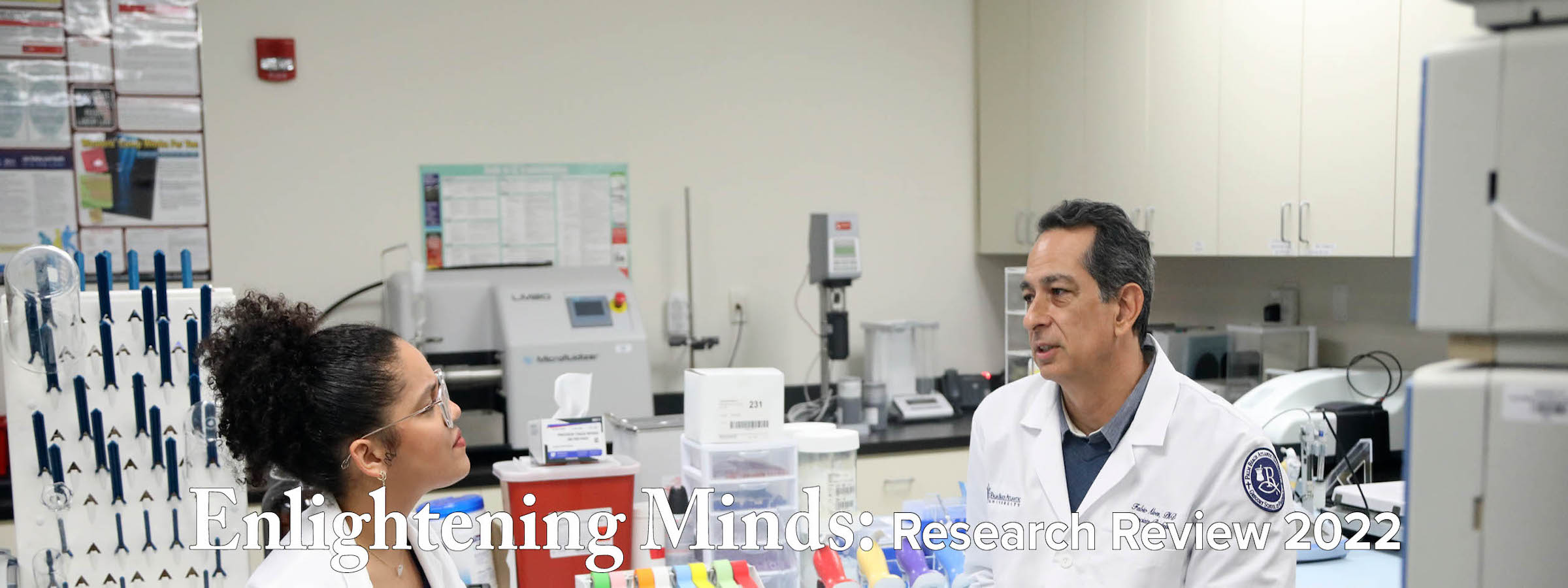
Aguiar-Alves is now updating his lab with specialized equipment for research, including an ultra freezer, which will prevent contamination of specimens by keeping the temperature as low as minus 80 degrees Celsius. He will be testing various molecules to see which ones are effective against the Staphylococcus aureus bacteria. He鈥檒l be assisted by 鈥渟ome very brilliant students,鈥� he said, including pharmacy intern Joelys Tardy Vargas, who is from Puerto Rico.
Tardy Vargas previously assisted in research conducted by pharmacy professors聽Dr. Adwoa Nornoo聽and聽Dr. Edwin Santini. She鈥檚 learned that as researchers test hypotheses, the results often bring surprises. 鈥淒uring that process,鈥� she said, 鈥測ou develop your critical thinking, and you can view things from a different perspective. I鈥檝e had the opportunity to open my mind to view those experiences as growing, and not just get frustrated because things weren鈥檛 working out like we expected.鈥�
Professors Nornoo and Santini are from Nigeria and Puerto Rico, respectively. Brazilian Aguiar-Alves celebrates the rich diversity he鈥檚 found in the Gregory School. Other nations represented among the faculty include the United States, Lebanon, Cuba, Egypt, Tobago and the Netherlands. The 212-member student body is diverse as well: 38 percent Hispanic; 30 percent white; 17 percent Black or African American; 12 percent Asian; and 3 percent of race not reported.
In the classroom, in the laboratory and in the pharmacy school in general, Aguiar-Alves said, the blending of so many different cultures and life experiences 鈥渋s a powerful combination.鈥�
Photo above: Dr. Fabio Aguiar-Alves discusses staph infection research with pharmacy student Joelys Tardy Vargas.聽